

Invisible Threads by Lucy Beresford shortlisted for International Rubery Award
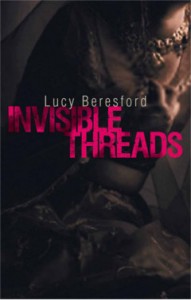 Congratulations to Lucy Beresford whose novel Invisible Threads was shortlisted for the International Rubery Award. Go here to read the full list.
Get your copy of the book here!
Sunny Singh blogs about a new venture on the Foyles Blog…
‘With Hotel Arcadia, I decided to find out. I am asking readers to send in photographs of the novel wherever they choose to read it. They can send in the photographs by email, or post them to my Facebook page, or on Twitter or Instagram, with the hashtag #wherebooksgo. I use the hashtag too, to post photographs of books I am reading. It is both a way to recommend books I love and to thank the writers for the magic they create with their words’
Sunny Singh, author of Hotel Arcadia, has started a new venture to document where books go…
Read the full post on the Foyles blog here today. Get your copy of Hotel Arcadia by Sunny Singh now!
Val Hennessy tells Female First ten things about herself…
‘My novel, Not Far from Dreamland, is dedicated to the woods and hop-fields of Cobham, Kent (now buried beneath tarmac) where I used to go hop-picking in the 1950s. In the 1980s I was friends with Terence Stamp (a great actor, in my opinion) and we once spent a lovely, nostalgic day in the Kent hop-fields where he went “hopping” as a kid. It rained, and as we shivered under the dripping hop vines he said, “Do you fancy a drink,Val?” and handed me a hip-flask. I thought I was about to get a welcome, warming swig of vodka, but it was some sort of dreary herbal water. Stamp is teetotal. Boo!’
Val Hennessy tells Female First ten things about herself. The above is the first…
Read here for more! And get your copy of Not Far from Dreamland by Val Hennessy here today.
Lucy Beresford writes about Refuge for Books for Female First
Lucy Beresford discusses Refuge for Books and her new title Invisible Threads for Women’s online magazine Female First. Get your copy of Invisible Threads here.
Grace Vane Percy will be speaking at the Olympia International Art & Antiques Fair tomorrow!
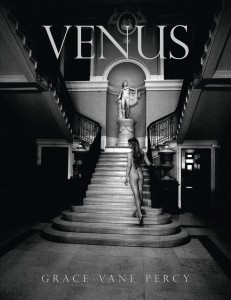 Grace Vane Percy will be speaking at the Olympia International Art & Antiques Fair tomorrow!
Grace will be discussing ‘Art and the Interior Aesthetic: An Analysis of Display in the English Stately Home’ with Christopher Vane Percy and Jeremy Musson.
Get a copy of Venus by Grace Vane Percy today!
Rupert Darwall writes for the National Review
 Rupert Darwall on ‘Pope Francis’s Vow of Poverty – For All’ for the National Review. Read the full article here.
The Age of Global Warming by Rupert Darwall is available now. Get your copy here today!
Grab this Book reviews Hotel Arcadia by Sunny Singh
‘This is an outstanding read, the juxtaposition of war zone and luxury hotel creates such powerful images. I loved the tension that Sunny Singh generated each time Sam left the safety of her room it had me frantically flicking the pages urging her to get her back to safety… A gripping, thoughtful read and one that will remain long in my memory’
Grab this Book blog reviews Hotel Arcadia by Sunny Singh. Get your copy of the book here today!
Tablet Magazine reviews Hotel Arcadia by Sunny Singh
‘An elegantly plotted, psychologically subtle and almost unbearably exciting thriller’
Tablet Magazine reviews Hotel Arcadia by Sunny Singh. Get your copy here today.
The Week reviews The White Umbrella by Brian Sewell
‘The donkey is adorable, and the book certainly does tug the reader along’
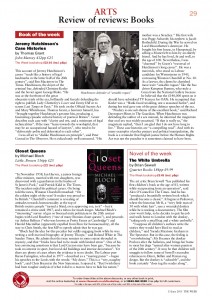
The Week lists The White Umbrella by Brian Sewell as ‘Novel of the Week’. It’s a fantastic title for children and adults alike. Get your copy of the book here today!
The Spectator reviews Invisible Threads by Lucy Beresford
‘The book’s great strength is the plurality of the title’s Invisible Threads. These allude to the marital bond that pulls Sara along in her quest to discover how her husband died, and also to her links with the abused women of India she tries to help on the way … Beresford’s novel is both enjoyable and eye-opening, alluring and appalling; it is a call to respect the ties that bind us all’
The Spectator gives a fantastic review of Invisible Threads by Lucy Beresford. Get your copy of the book here today!
Guest blogger Thomas Kennedy shares what motivated him to write The Avery-Stripes…
 In about 2003, my boyfriend at the time suddenly boasted to me: ‘My name is one of only two Englishmen’s names that have four syllables.’
‘Don’t be ridiculous!’ (I admit, in hindsight), I rather snottily replied, ‘There are heaps of them!’
And I began to reel them off, finishing with the claim that I could create an entire family tree consisting of Englishmen with four-syllable names, and so the seed for The Avery-Stripes was sown.
In the decade that followed many of my idle moments were spent imagining five generations of the family and decided that the number of syllables in their names would be a thing of great importance to them, and then I began to think why that might be.
Growing up in Bedford Park, I encountered many families who seemed to consider themselves superior, though I could never discern what this belief was based upon. Occasionally, I would spot a chink of enlightenment as to their reason but would think it laughable, and remembering this I decided that the Avery-Stripes’ delusions of grandeur would be based primarily upon the exploitation of guano.
Wanting the family to be detestable and lovable at the same time, I set out to make the reader somewhat despise them from the beginning but would hopefully grow to love them as the story developed. A set up that has always appealed to me in books ranging from the Moomin stories through to the novels of Nancy Mitford and Evelyn Waugh, several characters of which inspired the creation of those in The Avery-Stripes. Strange collections of people who, as is often the case, would unlikely interact were they not related and living under the same roof.
The Marchioness of Marchmain and the Bolter certainly contributed toward the character of Olivia, except, of course, it was not the Catholic faith that she preaches to her children but the import of lineage, money and noblesse oblige. Lord Sebastian Flyte and Cedric Hampton have a bearing on Valentine, but with him I wanted to create a stronger character, one who, whilst comical, was also resilient, and though manipulative and somewhat treacherous, was likeable enough to hopefully persuade the reader to root for him. Tom Ripley also had an influence on Valentine, with his ability to mimic and forge – though Valentine would not ever murder. Perhaps he could be Mr Ripley’s equally talented, but less sinister and far more fanciful, nephew?
As for the rest of the book, I cannot account exactly what inspired specific things. I am unable to remember how I came about imagining a small boy in a feathered headdress with three Dalmatians beneath a grand piano but I remember clearly the image coming to me. I made this boy – Corny – mute because I wanted to play with language: Valentine’s overuse of it; Olivia’s predilection for alliteration; Gretchen’s accent and Harry and Izzy’s speech impediments. It just made sense to have a mute character.
Sense is not an aspect that much influenced The Avery-Stripes. I most certainly wanted to write a nonsensical book: An amusing, camp, modern fairy tale for grown-ups. One in which to escape completely what is of matter in the real world because the only world that matters to the Avery-Stripes is their own. And around it revolves the sun and moon, heaven and hell, love and hate, good and bad, every country, every colour and animal, because that family intrinsically holds their unwavering belief that none of these things would count for much were the Avery-Stripes not at the very epicentre of it all.
Thank you to our guest blogger – Quartet author Thomas Kennedy. The Avery-Stripes is published by Robin Clark, an imprint of Quartet Books, and available now. Get your copy of the book here today!
Naim Attallah on the publication of The Melancholy of Resistance
‘The puff around the award of this year’s Man Booker International Prize announced, with great flourish, at the V&A Museum was in marked contrast to the almost universal silence which greeted Quartet’s publication of the author’s masterpiece, The Melancholy of Resistance, in 1998, when we published the first English translation of this remarkable Hungarian writer’
Our Chairman Naim Attallah on The Melancholy of Resistance by László Krasznahorkai, published by Quartet Books in 1998. To read the full blog post go here.